Where the number comes from
The quote over the phone gives you the number. It depends on what we hear about the load, the two ends of the trip, and the ground and weather on the day. The more complete the description, the closer the quote fits the job.
What drives the cost of gravel hauling
What the gravel is for
A parking lot, a home or a commercial job each shape how the loads are planned.
Roughly how much is needed
More gravel means more hauling. A rough idea is enough to start.
Where it is coming from and going
The distance between the two is a large part of the price.
How the truck gets in at each end
An easy way in costs less than a tight or soft one.
Where the load should go
A spot a truck can reach directly is simpler than one it has to work to reach.
More on the gravel hauling page.
What drives the cost of equipment hauling
What the machine is
The make and model tell us most of what we need.
Its size and weight
These decide which trailer can carry it.
Flatbed or lowboy
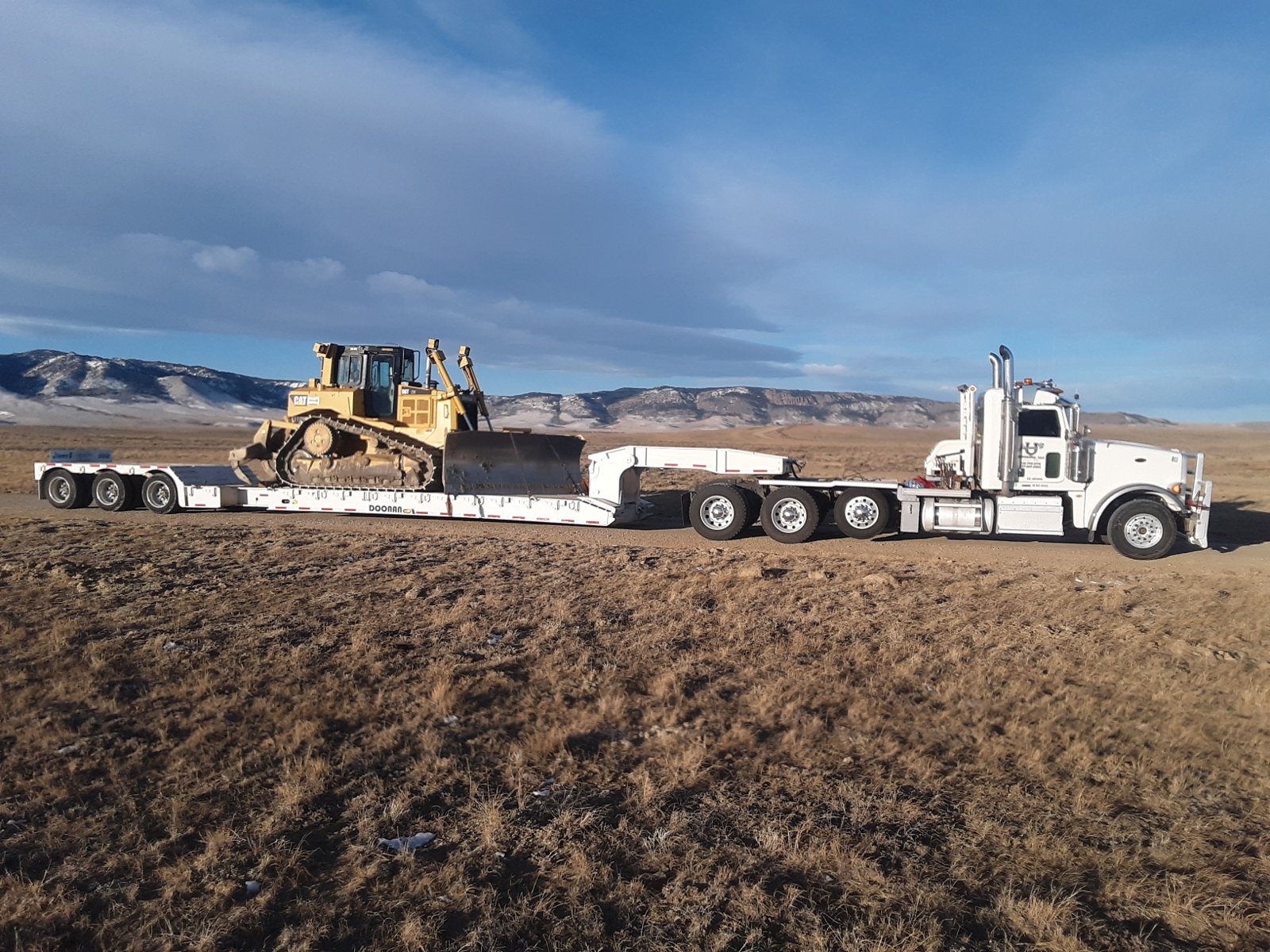
Taller and heavier machines need the lowboy, which is a bigger undertaking.
How it gets on and off
A machine that drives on loads differently from one that doesn't run.
Access at both ends
Room to load and room to turn at the pickup and the drop-off.
More on the equipment hauling page.
What drives the cost of a winch-truck move
What the load is, and its size
A frac tank, a water tank or a similar load.
Where it sits now and where it is going
Both spots matter as much as the road between them.
Room to back up
The truck has to line up with the load.
The ground
Firm ground makes for a simple move. Soft ground does the opposite.
What is overhead
Power lines and branches change how the truck can approach.
More on the winch truck services page.
What every haul has in common
The miles involved
Getting to the pickup, hauling the load, and getting back.
The drive from Montpelier
Our trucks are based in Montpelier, ID, so the trip to you is part of the job.
Timing
When the load has to move, and how that fits around weather and ground.
Harder access
Whatever makes it harder to get in or out at either end.
Why two hauling quotes come back so different
Two quotes for what sounds like the same job are often quotes for two different jobs. The gap usually comes from one of these:
- A different idea of the load's size and weight.
- A different trailer.
- Different miles.
- Different access at one end or both.
- A different idea of what is included.
Give every hauler the same description and the quotes become much easier to compare.
What a quote should cover
- What is being hauled, described the way you described it.
- Where it is being picked up and where it is going.
- Which truck or trailer the job calls for.
- What was assumed about access and ground at each end.
- When the haul is planned, and what could move it.
If one of those is missing, ask. The guide on mistakes to avoid when hiring a hauler lists the details people leave out, and the FAQ answers the short questions.