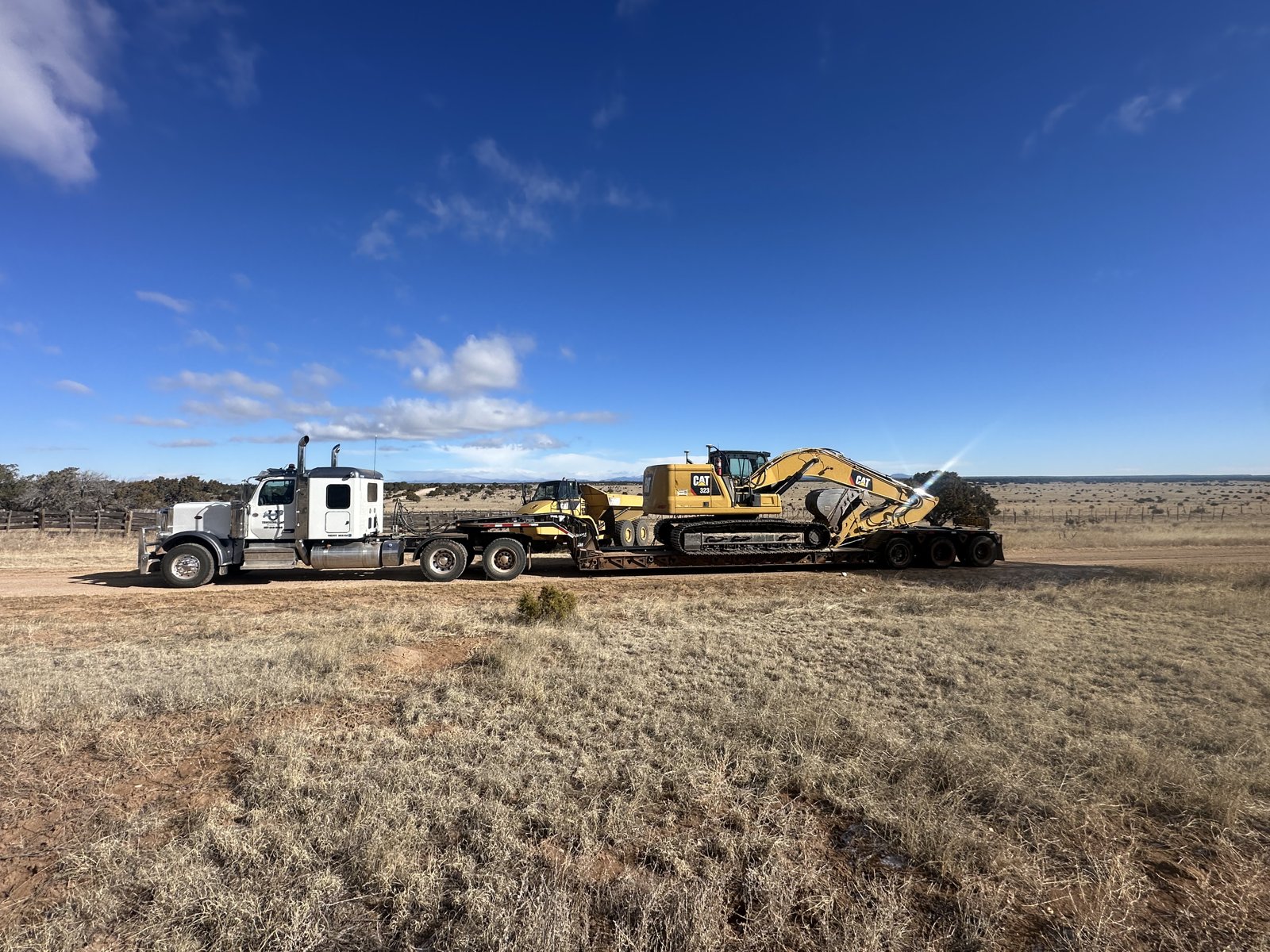
The machine itself
The first thing that drives the cost is what the machine is. A small tractor and a large excavator are not the same job. The make and model tell us roughly how big and how heavy the machine is, and that shapes almost everything else about the haul.
This is why we'll always ask for the make and model. If you don't know them, describe the machine as best you can, or send a photo. The clearer the picture, the closer the quote matches the job.
Its size and weight
A machine's height, width, length and weight decide how it rides on a trailer. A machine that sits comfortably on a standard deck is a simpler haul than one that needs to ride low because of its height, or one that needs a heavier trailer because of its weight.
Attachments and anything that sticks up or out count too. A tall cab, a raised arm or a wide blade can change the load enough to change the trailer. Tell us about all of them.
Which trailer it needs
We move equipment on flatbed and lowboy trailers. A flatbed is an open, flat deck that suits equipment that loads easily onto a standard-height deck. A lowboy sits low to the ground so taller and heavier machines ride lower, and it is a long trailer that needs room to work. Which trailer the machine needs is part of the cost. Flatbed or lowboy: which trailer does your machine need? explains how that is decided, and flatbed vs. lowboy vs. winch truck puts the options side by side.
How it loads
Whether the machine starts, runs and steers makes a big difference. A machine that runs is a simpler job than one that doesn't. A machine sitting on firm ground, out in the open, is simpler than one tucked in a shed or sunk in a soft field.
If there is anything that makes loading harder, tell us when you call. It is part of the job, so it is part of the quote. Leaving it out doesn't make it go away. It just means the quote doesn't match the day.
The miles
The distance matters in two ways. There is the distance between where the machine is and where it is going. And there is the drive from our base in Montpelier, ID to the pickup and back from the drop-off. Both go into the price.
Longer trips cost more than shorter ones. That part is simple. What is less obvious is that a short haul a long way from Montpelier can cost more than a longer haul close by, because the drive out and back counts too.
Access at both ends
The pickup and drop-off spots each need room to get in, room to load or unload, room to turn and firm ground. A wide-open yard is simpler than a tight lane with a narrow gate and a sharp turn. If the truck has to back in a long way, or the trailer has to be maneuvered around obstacles, that takes more work. The post on tight access covers what to look for.
The ground counts too. Soft ground can stop a haul entirely, or mean the machine has to be loaded from a different spot. Getting your site ready for a truck covers the checks.
What isn't a cost driver
Some things people expect to matter don't make much difference on their own. Whether the machine is new or old, for example, matters less than its size, weight and whether it runs. What the machine is worth isn't part of how we price the haul.
If two quotes for the same machine come back different, it is usually because the two haulers were working from different details. Why two hauling quotes can come back different explains how that happens.
Getting an accurate quote
The way to get a quote that matches the job is to give us all the details up front: what the machine is, its make and model, its size and weight if you know them, its attachments, whether it runs, where it is now and where it is going, and what both ends are like. What to tell a hauler about your equipment lists them all.
How much hauling costs covers costs for gravel and tanks as well as equipment. Mistakes to avoid when hiring a hauler covers the details people leave out, and what can hold up a haul covers what can move the date. When you're ready, call (208) 271-3641 or see our equipment hauling page.