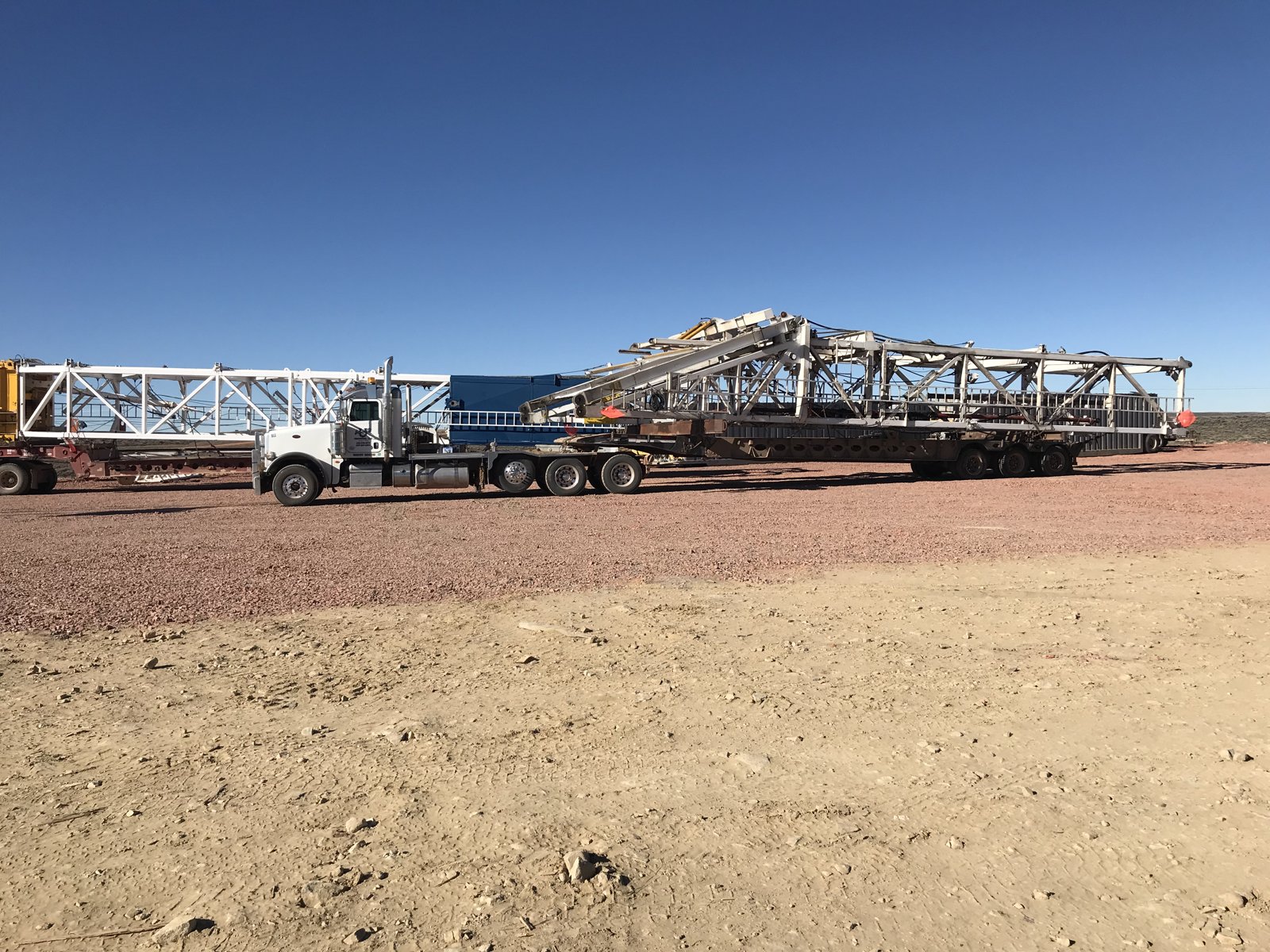
The two trailers
A flatbed is an open, flat trailer deck. It suits equipment that loads easily onto a standard-height deck. It is the more familiar of the two, and it works for a wide range of smaller and mid-sized machines.
A lowboy is a trailer whose deck sits low to the ground, so taller and heavier machines ride lower. It is a long, low trailer, and it needs room to get in, load and turn. It is built for the machines a flatbed doesn't suit.
Height
The first thing that decides the trailer is how tall the machine is. A machine sitting on a trailer is taller than the same machine sitting on the ground, by the height of the deck. On a standard-height deck, a tall machine may end up too tall.
A lowboy's deck sits lower, so the same machine rides lower. That is the main reason tall machines go on lowboys. When you tell us about your machine, mention the cab, the canopy, the exhaust stack, the arm or anything else that sets its height.
Weight
The second thing is how heavy the machine is. Heavier machines need a trailer built to carry them. A lowboy is built for taller and heavier machines, so weight can push a machine onto a lowboy even when its height would suit a flatbed.
If you know the machine's weight, tell us. It is often in the operator's manual or on a plate on the machine. If you don't know, give us the make and model, and we'll work it out from there.
How it loads
How the machine gets onto the trailer matters too. Whether it starts and runs, whether it is on tracks or tires, and whether it has attachments that need to come off all affect which trailer suits it. How the machine gets on and off is something we go over with you on the call.
If the machine doesn't run, tell us. That changes how it loads, and it may change the trailer. Getting a machine ready to be hauled covers what to check before the day.
The room each trailer needs
A lowboy is long. It needs room to get onto the property, room to turn, room to line up for loading and room to get back out. A site that a flatbed can reach easily may be too tight for a lowboy. Its low deck can also catch on a hump or crest that a flatbed rolls over.
That means the sites at both ends can affect the choice, not just the machine. Tell us about the gate, the turns, any humps or dips and the room to turn around. The post on tight access covers what to look for, and making room for a truck and trailer to turn around covers turnarounds.
When it's close
Some machines sit right on the line between the two. When that happens, the details decide it: the exact height with attachments, the weight, how it loads and what the sites are like. That is why we ask so many questions on the call. It is how we get the trailer right the first time.
If you aren't sure, don't guess. Give us what you know and say what you don't. A guess that turns out wrong can mean the wrong trailer arrives.
How the trailer affects cost
Which trailer the machine needs is part of the price, along with the machine itself, how it loads, the miles and the access at both ends. What drives the cost of hauling equipment explains each one, and how much hauling costs covers costs more widely.
What about a winch truck?
A winch truck is a different tool. It pulls a load up onto its bed with a winch and suits frac tanks, water tanks and similar loads, not machines that drive onto a trailer. Flatbed vs. lowboy vs. winch truck puts all three side by side, and choosing the right hauling service sorts out which one your job calls for.
When you know what the machine is, call (208) 271-3641 or see our equipment hauling page.