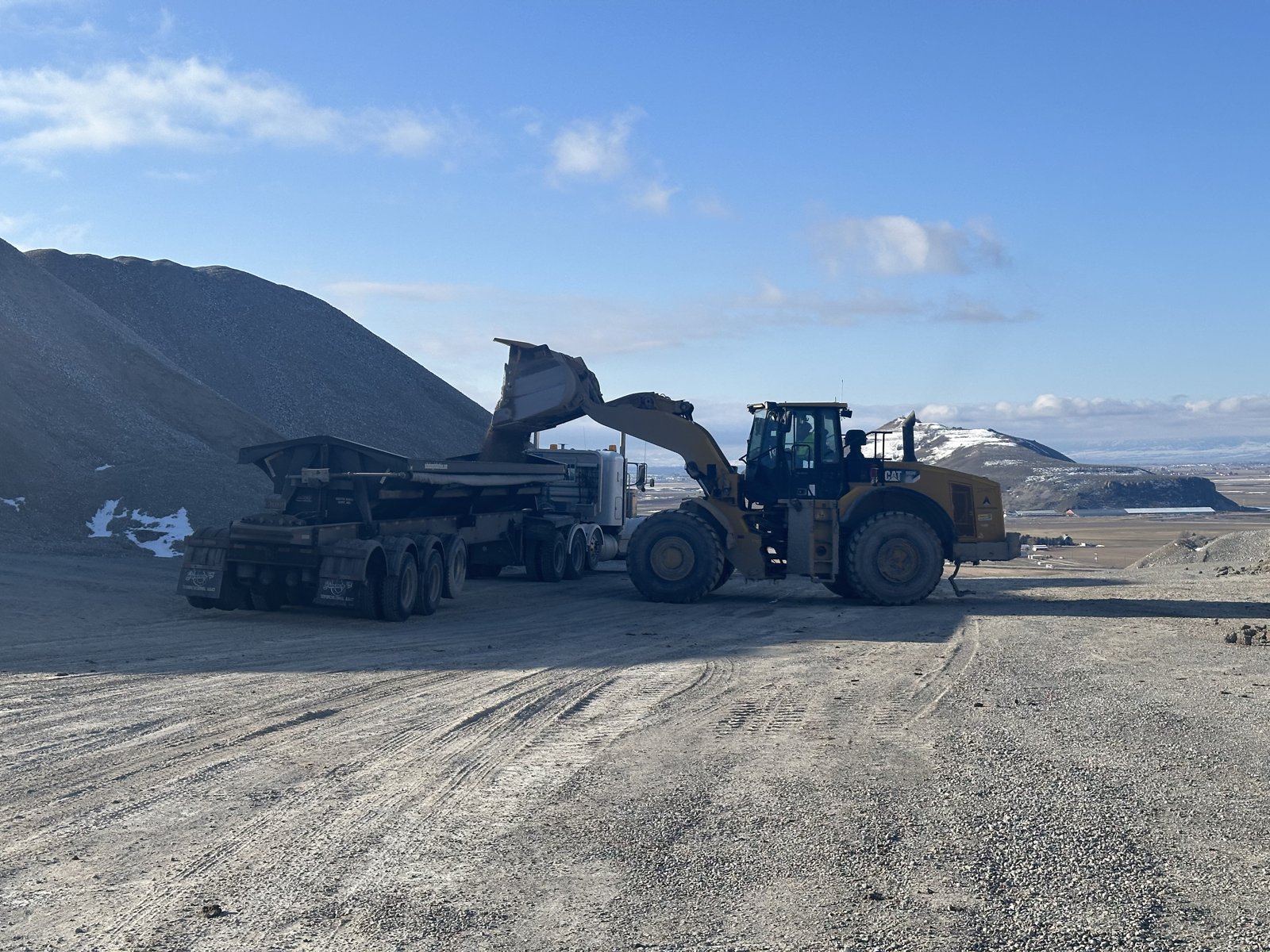
Check that it starts and runs
The most useful thing you can do is start the machine a few days before the haul. Check that it runs, moves forward and back, steers and stops. Check the tracks or tires. A flat tire, a thrown track or a dead battery is much easier to deal with ahead of time than on the day.
If the machine doesn't run, tell us when you call. A machine that can't move under its own power is a different job, and we need to know about it to plan the haul and give you an honest quote.
Clear off loose items
Walk around the machine and look for anything that isn't bolted down: tools in the cab, chains on the frame, a shovel on the deck, a toolbox, spare parts, a fuel can. All of it needs to come off before the machine is loaded. Anything left on a machine can shift or fall during the trip.
Look inside the cab too. Loose items on the floor or seat can slide into the controls. Close and latch doors and windows. If there is a canopy, a mirror or a light that could catch on something, mention it.
Sort out attachments
Decide which attachments travel with the machine and which stay behind. A bucket usually rides on the machine, lowered to the deck. A second bucket, a breaker, forks or a blade may need to travel separately or on the same trailer beside the machine.
Tell us about every attachment that is coming along, and about anything that sticks up or out. Those details decide the height and width of the load, and that decides which trailer the job needs. What to tell a hauler about your equipment lists the details we'll ask for.
Knock off the worst of the mud
A machine caked in mud and rocks drops it on the trailer and on the road. Clods of dirt packed into tracks also hide problems and add weight. Knock off the worst of it before the haul if you can. A spotless machine isn't needed. A reasonable one is.
If the machine has been sitting in a wet spot, check whether it is stuck before the truck comes. A machine sunk into soft ground has to be got out before it can be loaded, and that is worth knowing about on the phone.
Get the machine where the trailer can reach it
If the machine is sitting in a tight corner, behind a building or in a soft field, move it, if you can, to a spot the truck and trailer can reach. That spot needs room to load, room to turn and firm ground. A lowboy in particular is long and needs room.
If the machine can't be moved before the haul, tell us where it is and what is around it. The post on tight access covers gates, corners and overhead lines, and getting your site ready for a truck covers the ground and the turnaround.
Get the far end ready too
The drop-off spot needs the same attention as the pickup. Room to get in, room to unload, room to turn and firm ground. If someone else is at the far end, make sure they know the machine is coming, where it should go and who to expect.
If the far end is a job site, check that the spot for the machine will be clear on the day. A machine that arrives to find its spot full of materials or other equipment has to wait, and so does the truck.
Have the paperwork and keys sorted
Make sure the keys are with the machine, or with someone who will be there. If you've just bought the machine, make sure the seller knows it is being picked up and has agreed to the day. The post on moving a machine you just bought covers that situation in more detail.
A short checklist
- The machine starts, runs, steers and stops.
- Loose tools, parts and items are off the machine and out of the cab.
- Attachments are sorted, and we know which ones are coming.
- The worst of the mud is knocked off.
- The machine sits where the trailer can reach it on firm ground.
- The drop-off spot is clear and someone knows the machine is coming.
- The keys are with the machine.
If something about the machine changes after the quote, call us before the day. What can hold up a haul explains why. When you're ready to book, call (208) 271-3641 or see our equipment hauling page.