Why what is underground matters
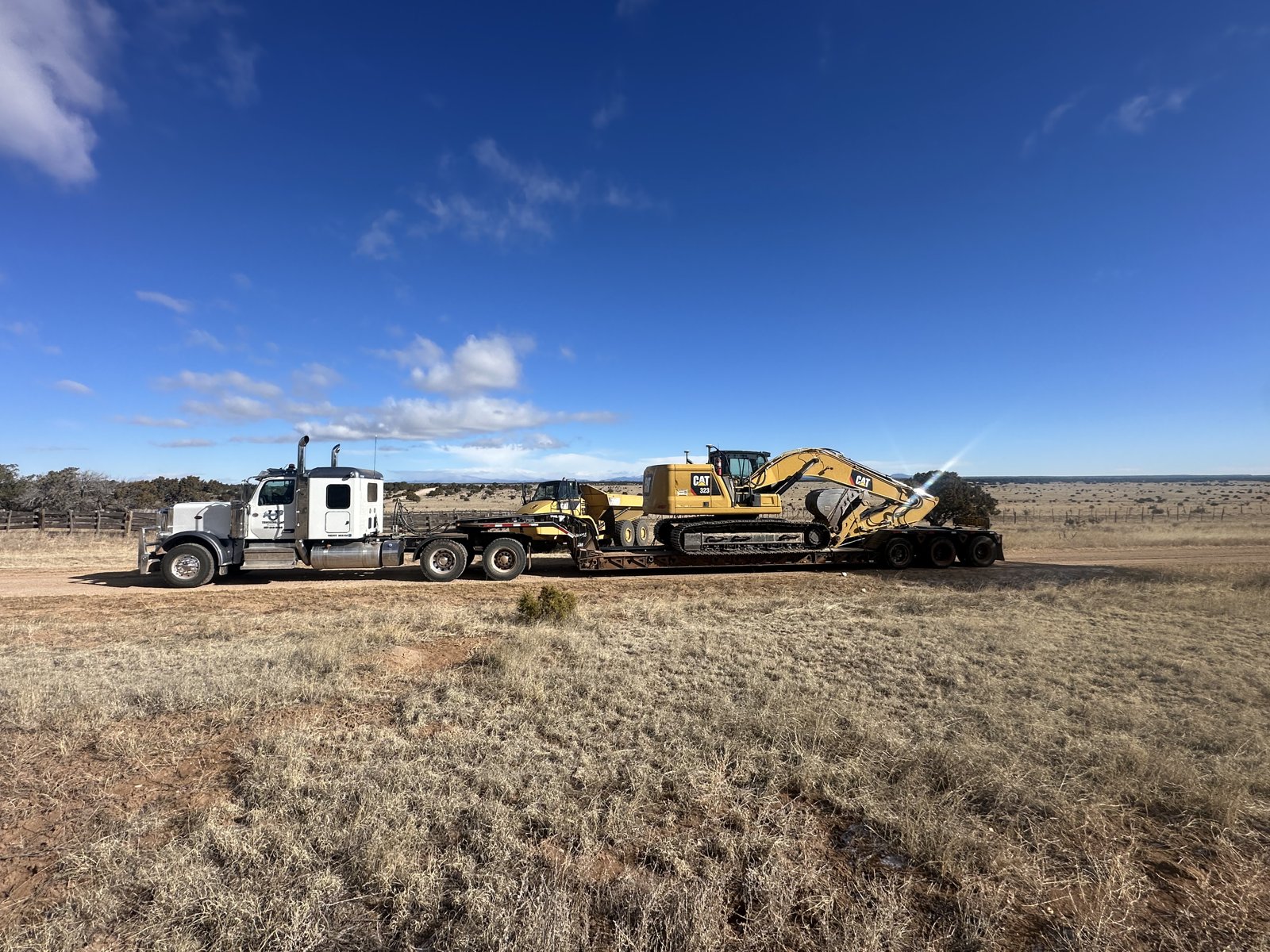
A loaded truck presses down on the ground far harder than the vehicles a yard normally sees. Ground that carries a car or a pickup every day can still give way under a truck with a load on, and whatever is buried in that ground takes the weight too.
Tanks, pipes and lines are put in the ground to be out of the way, and most of them were never meant to have a heavy truck parked on top. The damage is not always obvious on the day, either. A cracked pipe or a shifted tank lid can show up later as a wet patch or a sunken spot. That is why this is something to raise before the truck comes, while the path can still be changed.
Septic tanks and lines
If the property has a septic system, there are two parts to think about: the tank itself, and the lines that run out from it into the yard. The tank sits fairly close to the house. The lines spread out over a wider area, and that area often looks like the most inviting open ground on the property, which is exactly why trucks end up on it.
Tell us where the tank is and which way the lines run, as best you know. If there are lids or covers at the surface, those mark the spot. If you only know roughly, say that, and tell us so we can plan around it. A longer path across firm ground beats a short one across a septic system.
Wells
A well usually has something showing above ground, but the line that carries water from it to the house does not. Point out the well itself and, if you know it, the direction the line takes. On many properties that line crosses the same open ground a truck would use to reach the back of the lot.
The same goes for the power feeding a well pump, which is often buried alongside the water line. You do not have to know exactly where either one is. Knowing that they run somewhere between the well and the house is enough to steer the truck around that stretch.
Other buried lines you know about
Think about what else has been put in the ground over time. Water lines to a barn or a stock tank, power run out to a shop or a yard light, a drain pipe under the track, sprinkler lines in a lawn, a culvert at the entrance. Some of these were put in by you, some by whoever owned the place before.
List what you know of, even if you are unsure of the exact route. A culvert deserves its own mention, because a truck has to cross it to get in at all, and an old or shallow one can be crushed by a heavy load. If the entrance has a culvert, tell us what it is made of and what shape it is in, if you can see.
How to point it out
The simplest way is to describe it on the phone in terms of things a driver can see: "the septic tank is between the house and the big tree", "the water line runs from the well straight to the back door". Landmarks work better than distances.
On the day, marking helps. A few stakes, a cone, a bucket turned upside down or a length of bright tape on the ground will keep a truck off a spot better than a description alone. Leave the markers in place and tell us what they mean.
If you aren't sure where something is
Say so. "There is a septic system and I do not know where the lines are" is a useful thing to hear, because it tells us to treat the whole area with care and to choose a path that avoids open ground near the house. Guessing, or saying nothing, is what causes trouble.
It can also help to ask whoever knows the property best: a previous owner, a neighbor, or the person who last worked on the system. A few minutes spent finding out is well worth it when the alternative is a truck sitting on a tank lid.
Where the load will sit
The path is only half of it. The load itself stays where it is put, and a pile of gravel or a tank weighs on the ground for as long as it is there. Pick a spot that is clear of the septic tank and lines, the well and whatever else you have listed, and tell us where it is before the day.
For gravel, the gravel hauling page lists what else we'll ask about where the load should go. For a tank, the ground under it matters as much as the ground the truck drives on, and soft ground brings its own problems, which what can hold up a haul explains.
Pulling it together
Buried things are one part of getting a site ready. The way in, the gate, the room to turn around and the lines overhead are the others, and getting your site ready for a truck covers the whole picture.
A path that has to go the long way around can affect the job, and how much hauling costs explains how access feeds into a quote. The amount of room a truck needs also depends on which one comes, as the comparison of flatbeds, lowboys and winch trucks shows.
Whether you are in Montpelier, ID or another town on this site, the request is the same: tell us what is under the ground before we drive on it. The FAQ has a short list of what to do before the truck arrives.