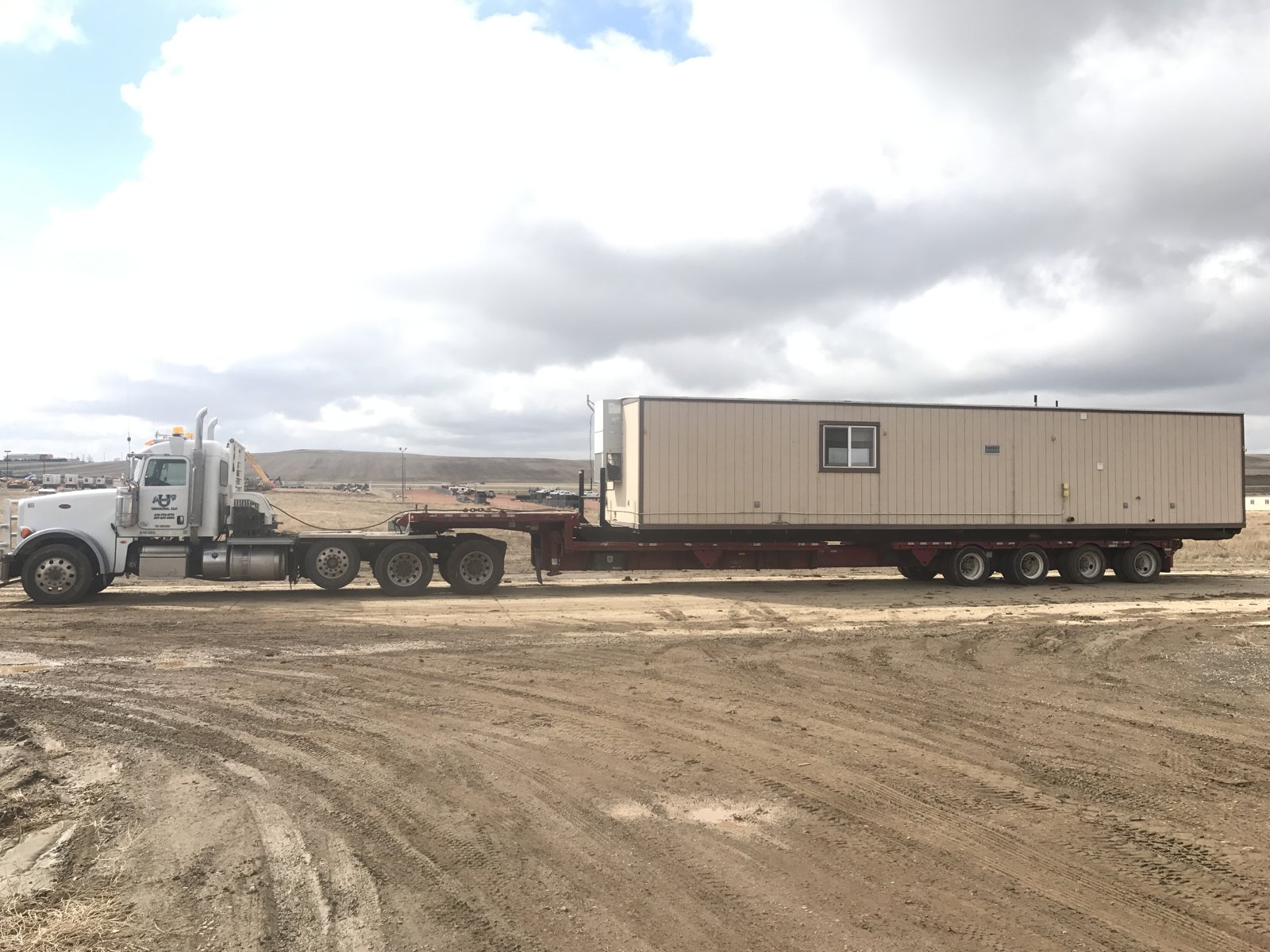
When doing it yourself makes sense
If you have a small load, the right truck and trailer for it, and the know-how to load and secure it, hauling it yourself can make sense. A few bags of gravel, a small garden tractor or a light piece of equipment on a trailer rated for it are the kinds of jobs many people handle themselves.
The key is that your truck and trailer are built for the load. Check what your truck is rated to pull and what your trailer is rated to carry, and stay well within both. If the load is close to either limit, it is time to think again.
When the load is too big
A truckload of gravel for a parking lot or a home is more than a pickup and a small trailer can carry in one trip, and many trips add up. A full-sized machine is often too tall, too heavy or too wide for a standard trailer. A frac tank or a large water tank can't be loaded onto an ordinary trailer at all.
These are the loads our trucks and trailers are built for: gravel for parking lots, homes and commercial jobs; equipment on flatbed and lowboy trailers; and frac tanks, water tanks and similar loads on winch trucks. Flatbed vs. lowboy vs. winch truck explains each.
Loading and unloading
Getting a load onto a trailer and off again is often the hardest part. A machine has to be driven or pulled onto the deck, lined up and secured. A tank has to be pulled onto a truck bed. Gravel has to be loaded and put down where it is needed.
Each of these takes the right equipment and some practice. Getting it wrong can damage the load, the trailer, the truck or the ground, and it can put people at risk. If you aren't sure how a load gets on and off, that is a good sign it is worth calling a hauler.
Securing the load
A load that shifts during a trip is a danger to you and everyone else on the road. Machines need to be chained or strapped down properly. Attachments need to be lowered or removed. Loose items need to come off. A tank needs to sit right on the truck.
If you haul it yourself, make sure you have the right chains or straps and know how to use them. If you don't, it is better to hire someone who does.
The site still matters
Whether you haul it yourself or hire a hauler, the site at each end has to work. The way in, the turns, what is overhead, the ground and what is buried all matter. The post on tight access and getting your site ready for a truck cover the checks.
The real cost of doing it yourself
Doing it yourself can look like it costs less on paper. But it is worth counting everything: renting a bigger trailer or truck if you need one, the fuel, your time, the trips, and the cost of anything that goes wrong along the way. A damaged machine, a bent trailer or a torn-up lawn can cost more than the haul would have.
When you hire a hauler, you get a quote for the job. How much hauling costs explains what goes into that quote, and why two hauling quotes can come back different explains how to compare them.
Questions to ask yourself
- Is my truck rated to pull this load, with room to spare?
- Is my trailer rated to carry it?
- Do I know how to load, secure and unload it?
- Can my truck and trailer get in and out of both sites?
- What happens if something goes wrong?
If the answer to any of these is no, or not sure, it is worth calling a hauler.
Next step
If you decide to hire a hauler, choosing the right hauling service helps you match the job to the service, and mistakes to avoid when hiring a hauler covers the common traps. What can hold up a haul explains what can move a date either way.
When you're ready, call (208) 271-3641 or send the quote request form.