Is the tank empty?
This is the first question we'll ask. A full or partly full tank is a very different load from an empty one. Liquid is heavy, and it moves around inside a tank as the tank tips onto a truck bed. Tell us plainly whether the tank is empty, and if it isn't, what is in it and roughly how much.
If the tank needs to be emptied before the move, that is something to arrange ahead of the day. Emptying a tank isn't part of the haul, so plan for it and make sure it is done before the truck arrives.
What kind of tank it is
Tell us what the tank is: a frac tank, a water tank or something similar. Tell us roughly how big it is, what it is made of and whether it has any fittings, valves, ladders or hatches that stick out. If you know the make or have a photo, share it.
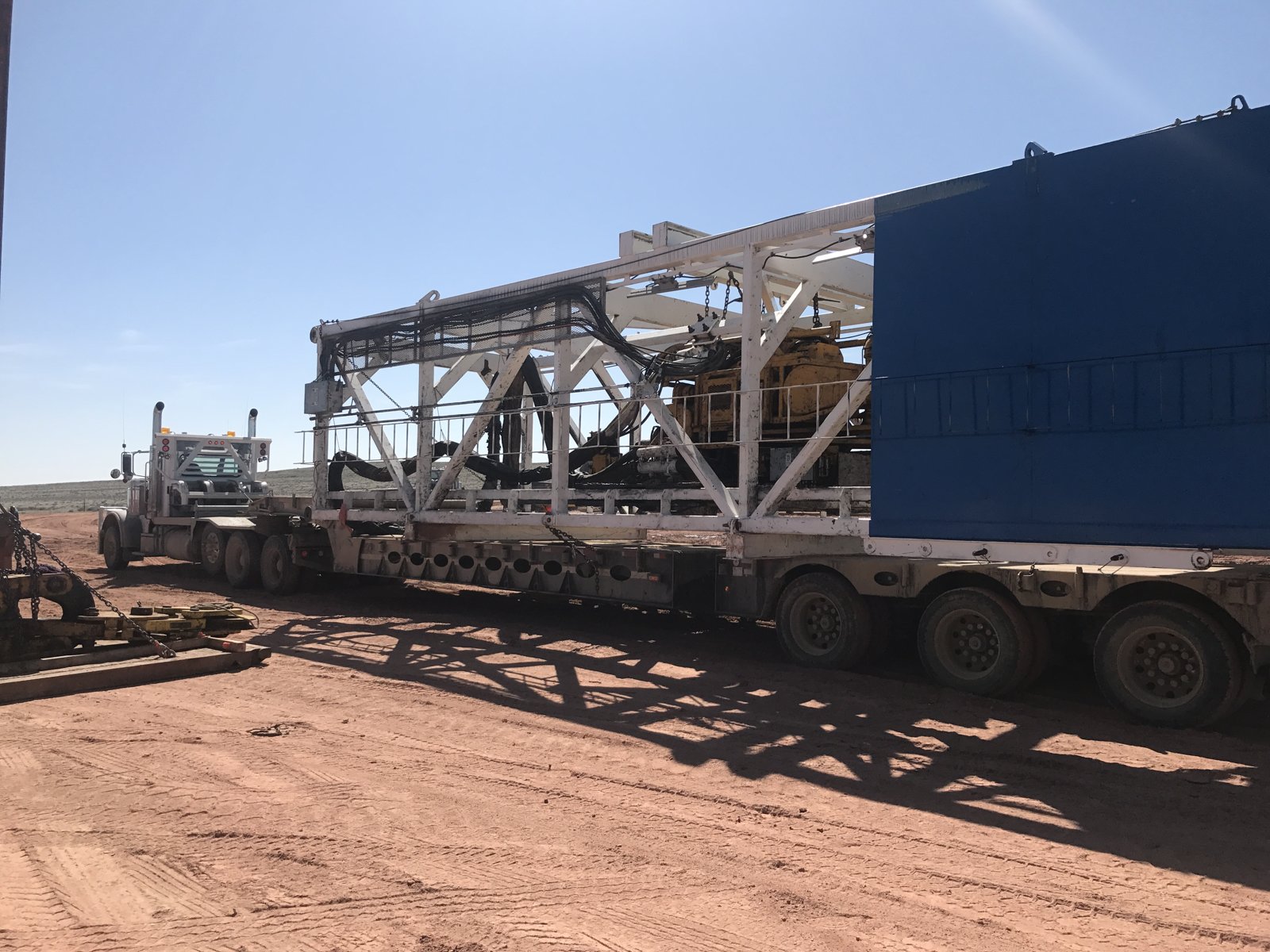
These details tell us how the tank will sit on the truck and how it will be hooked up. If the load is something other than a tank, describe it, and we'll tell you whether a winch truck suits it. What a winch truck does explains what the truck is built for.
Where the tank sits now
Tanks often sit in awkward places: tucked behind buildings, on a slope, beside a well, under trees or in a corner of a field. Tell us where the tank is and what is around it. Is it on firm ground? Is it sitting level? Is anything built up against it?
Check whether the tank is connected to anything. Pipes, hoses, wiring or a stand all need to be disconnected or removed before the move. If the tank is sitting on blocks or a pad, mention it.
Room to back up
A winch truck has to back up to the tank in a straight line, with enough room behind it to work. That means a clear path to the tank wide enough for the truck, with space at the end for the truck to line up.
If the only way to the tank is around a tight corner or through a narrow gate, tell us. Getting a site ready for a winch truck explains what the truck needs, and how to check your site for it.
Firm ground and clear overhead
The winch truck needs firm ground where it stops, because it holds its position while it pulls a heavy load. Soft ground, wet ground or ground that is still thawing can stop the move. If you know the ground near the tank stays soft, mention it.
Then look up. The tank rises as it comes onto the truck bed, so power lines, phone lines and branches over the tank or over the truck's path matter. Tell us what is there. You don't need to measure it.
What is under the ground
Tanks are often near wells, water lines, septic systems and buried power. A heavy truck driving over any of these can do real damage. Tell us where you know they are, and mark them on the ground if you can. The post on what to point out before the truck arrives covers this in detail.
Where the tank is going
The drop-off needs the same things as the pickup: room to back up, firm ground, clear space overhead and nothing buried where the truck will drive. Decide exactly where the tank should sit, and mark the spot.
If the tank is going onto a pad or a stand, make sure it is ready before the day. If it is going to a job site, tell us who is running the site and who the driver should look for.
What affects the cost and the date
The tank and its size, both spots, the room to back up, the ground, what is overhead and the miles all shape the price. How much hauling costs explains each one, and the quote gives you the number.
Soft ground is the most common reason a tank move is pushed back. What can hold up a haul explains why, along with the other causes. When you're ready, call (208) 271-3641 or see our winch truck services page. For how the trucks compare with trailers, see flatbed vs. lowboy vs. winch truck.