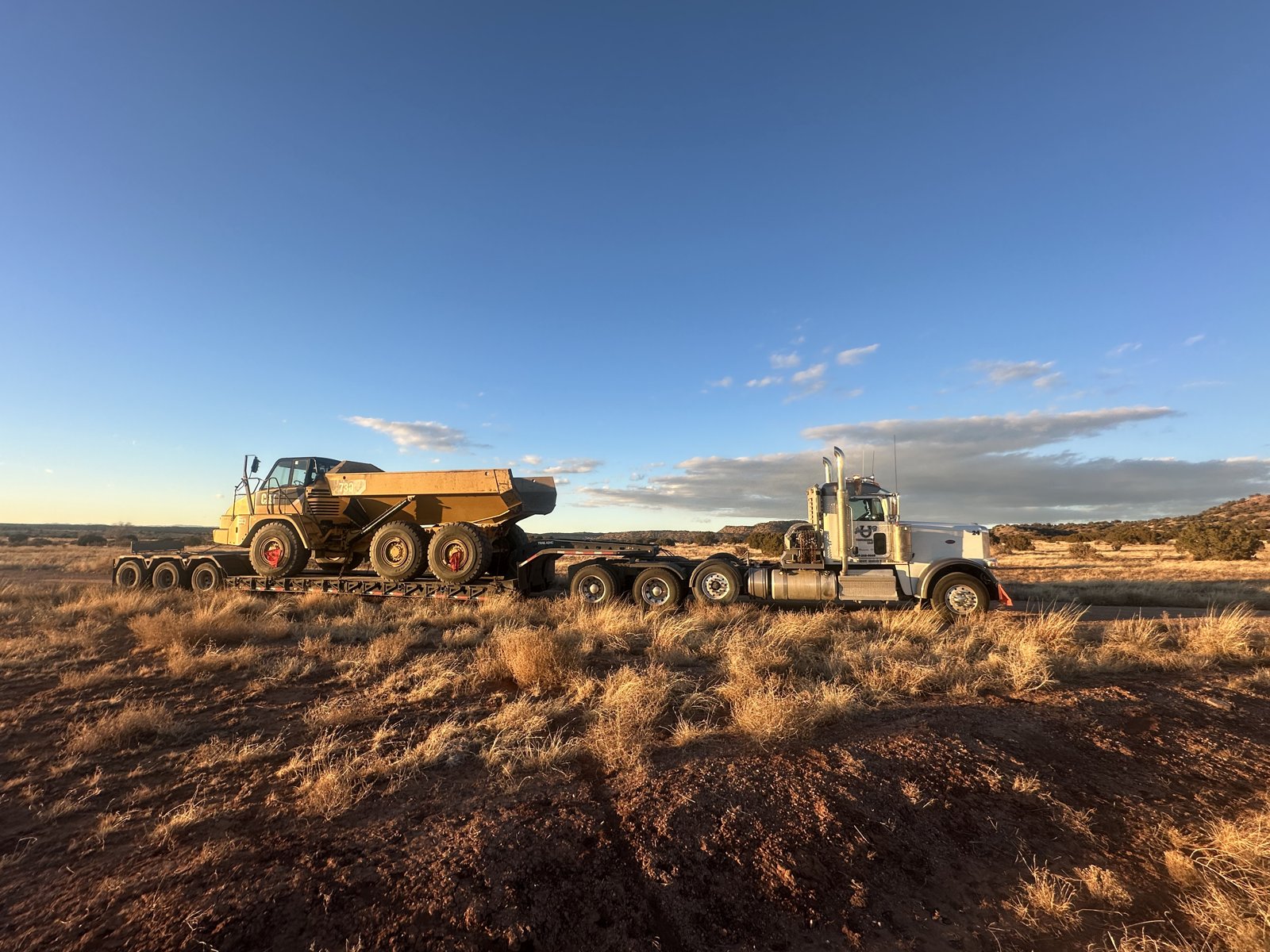
What a winch truck is
A winch truck is a truck that pulls a load up onto its bed with a winch and eases it off at the other end. The winch is a powered drum with a heavy cable. The cable is hooked to the load, and the winch draws the load up onto the truck bed. At the drop-off, the process runs in reverse and the load is let back down.
We use our winch trucks for frac tanks, water tanks and similar heavy loads. The kind of load matters, so if yours is something else, call (208) 271-3641 and describe it, and we'll tell you whether a winch truck suits it.
Why a winch truck instead of a trailer
A trailer suits a machine that can be driven or loaded onto a deck. A tank can't drive itself anywhere. It sits on the ground, often in a spot that is hard to reach, and it has to be pulled onto something to be moved.
That is the job a winch truck does. It backs up to the load, hooks on, and pulls the load onto the truck. Flatbed vs. lowboy vs. winch truck puts the three side by side if you want to see the differences in one place.
Loads a winch truck suits
Frac tanks are large steel tanks used to hold water and other liquids on work sites. Water tanks come in many sizes and are used on farms, ranches, job sites and homes. Similar heavy loads, such as large storage tanks, are the other main use.
What these have in common is that they are heavy, they sit on the ground, and they can be pulled onto a truck bed. If you have one that needs to move from one spot to another, a winch truck is likely the right fit. Moving a frac tank or water tank covers what to know before the move.
What a winch truck needs from the site
A winch truck has to back up to the load in a straight line, with room behind it to work. It needs firm ground under it, because it is pulling a heavy load and has to hold its position while it does. And it needs nothing overhead in the way, because the load rises as it comes onto the bed.
Those three things, room to back up, firm ground and clear space overhead, are needed at both ends of the trip. Getting a site ready for a winch truck goes through each one, and getting your site ready for a truck covers site prep more widely.
When you don't need a winch truck
If the load is a machine that can be driven or loaded onto a trailer, our equipment hauling service on a flatbed or lowboy is usually the better fit. If the load is gravel, our gravel hauling service covers it.
And if the load is something we don't haul, we'll tell you so on the call. It is better to hear that up front than to have the wrong truck turn up.
What to tell us on the call
- What the load is.
- Where it sits now, and what is around it.
- What is overhead: power lines, branches and the like.
- Whether the tank is empty.
- Where it is going, and what that spot is like.
- When it needs to be moved.
Look the site over before you call so you can describe it. The post on what to point out before the truck arrives covers septic systems, wells and buried lines near where the truck will work.
What affects the cost and the date
The load and its size, where it sits now and where it is going, the room to back up, the ground and what is overhead all shape the price, along with the miles. How much hauling costs explains each one, and the quote gives you the number.
Soft ground can push a tank move back, because a winch truck needs firm footing to pull a heavy load. What can hold up a haul explains why, along with the other things that can move a date.
Next step
If you have a tank or similar load to move, call (208) 271-3641 or send the quote request form. Our winch truck services page has the short version of everything here.