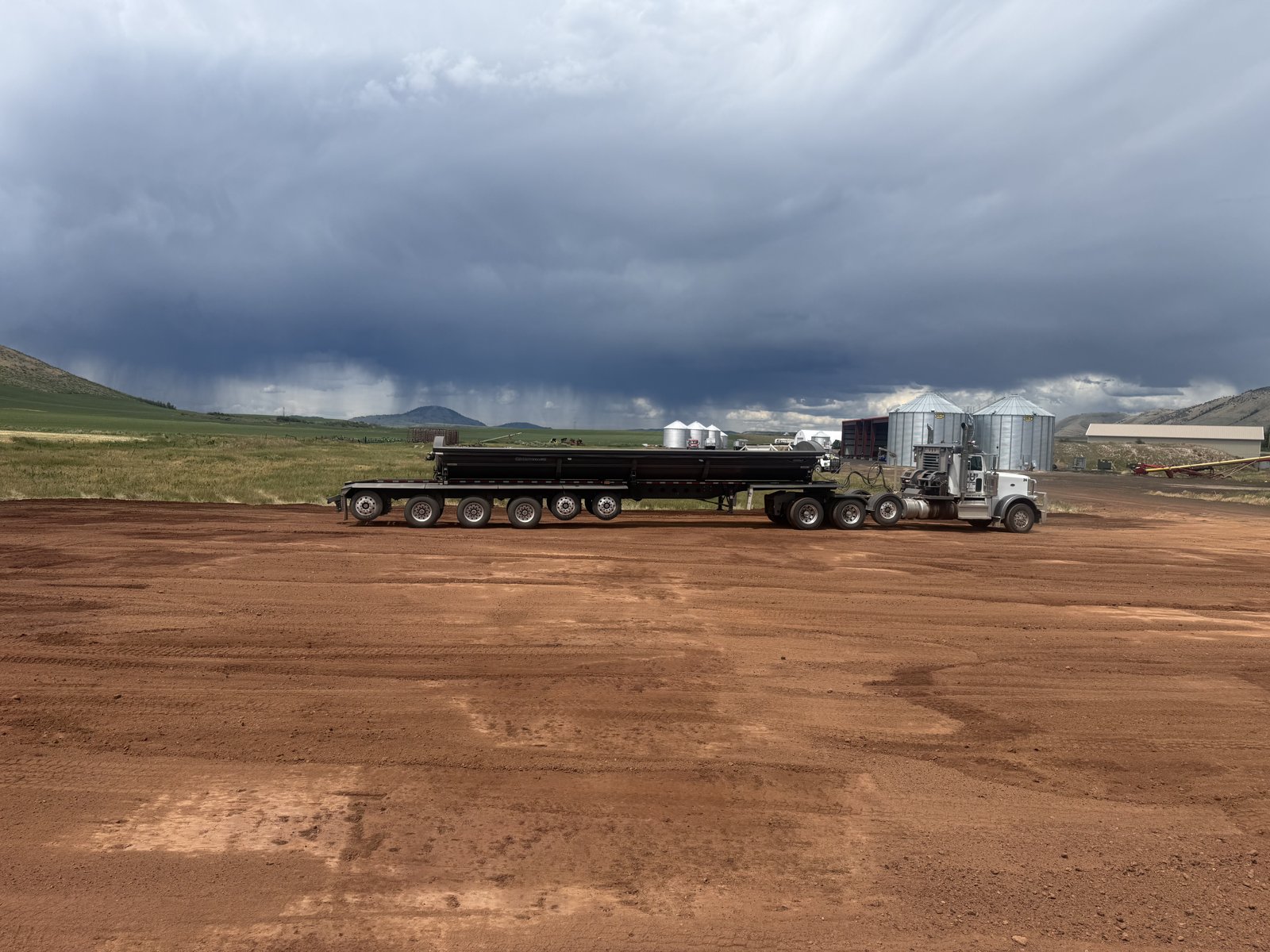
Why ground that holds a pickup can fail under a truck
A pickup spreads a modest weight over four tires. A loaded gravel truck, a truck pulling a trailer with a machine on it, or a winch truck pulling a tank puts far more weight on the ground through each tire. Ground that easily holds the pickup can give way under the heavier truck.
When it gives way, the truck sinks. A sunk truck can tear up a lawn, rut a lane, damage buried lines and get stuck. Getting a stuck truck out can do more damage than the original problem. That is why soft ground is taken seriously.
Where soft ground hides
Soft ground isn't always obvious. Some of the most common places are lawns, which often look firm but sit on soft soil; low spots that collect water after rain or snowmelt; the shoulders and edges of a lane, where the gravel thins out; ground near a septic drain field; and fields that have been worked or irrigated.
A spot that is firm in late summer can be soft in spring. A lane that holds up well in dry weather can turn to mud after a few days of rain. The ground changes with the season and the weather, so a check made weeks ago may not hold on the day.
How to check your ground
Walk the path the truck will take, and look at the ground closely. Does it squish underfoot? Are there puddles or wet patches? Do your boots sink in? Are there old ruts from other vehicles? Push a shovel or a stake into the ground. If it goes in easily, the ground is soft.
Check the spot where the truck will stop, too, and the spot where it will turn around. Those are where the most weight sits for the longest. The post on what to point out before the truck arrives covers buried lines and septic systems, which matter most on soft ground.
Spring thaw
In this part of the country, spring thaw is when soft ground causes the most trouble. As the frost comes out of the ground, the top layer thaws while the ground below stays frozen. Water from the thaw has nowhere to go, and the top layer turns soft and muddy.
Ground that was rock-hard all winter can become impossible for a heavy truck almost overnight. The post on planning a haul around winter and spring thaw covers how to plan for it.
What can be done about it
Sometimes there is a way around soft ground. The truck may be able to take a different line across firmer ground. The load may be able to go somewhere firmer and be moved from there. A machine may be able to be driven out to a firmer spot to be loaded.
Sometimes the honest answer is to wait. If the only way in is across soft ground, the haul is better put off until the ground firms up. That isn't a delay for the sake of it. It saves your property from damage and keeps the truck from getting stuck.
Why we'd rather wait
A haul that goes ahead on soft ground can leave you with deep ruts, a torn-up lawn, a damaged septic line or a stuck truck. Fixing any of those takes longer and costs more than waiting for firm ground. Moving the date is the less painful choice.
If we think the ground is too soft, we'll tell you plainly and go over the options. What can hold up a haul explains the other things that can move a date, and why being straight about them helps.
What to tell us
- Any part of the path that is soft, wet or holds water.
- Whether the truck will need to cross a lawn or field.
- Where the ground is firmest, if you know.
- Whether there is a septic system, well or buried line along the way.
- How the ground has been lately, after rain or snowmelt.
If the ground changes after you book, call us before the day. The post on tight access covers the other site details worth mentioning.
Planning ahead
If your job is flexible, it helps to plan it for a time of year when the ground is usually firm. If it isn't, plan for the chance that the date may move. Getting your site ready for a truck covers the full set of site checks, and how much hauling costs explains how access and ground feed into a quote.
When you're ready, call (208) 271-3641 or send the quote request form.