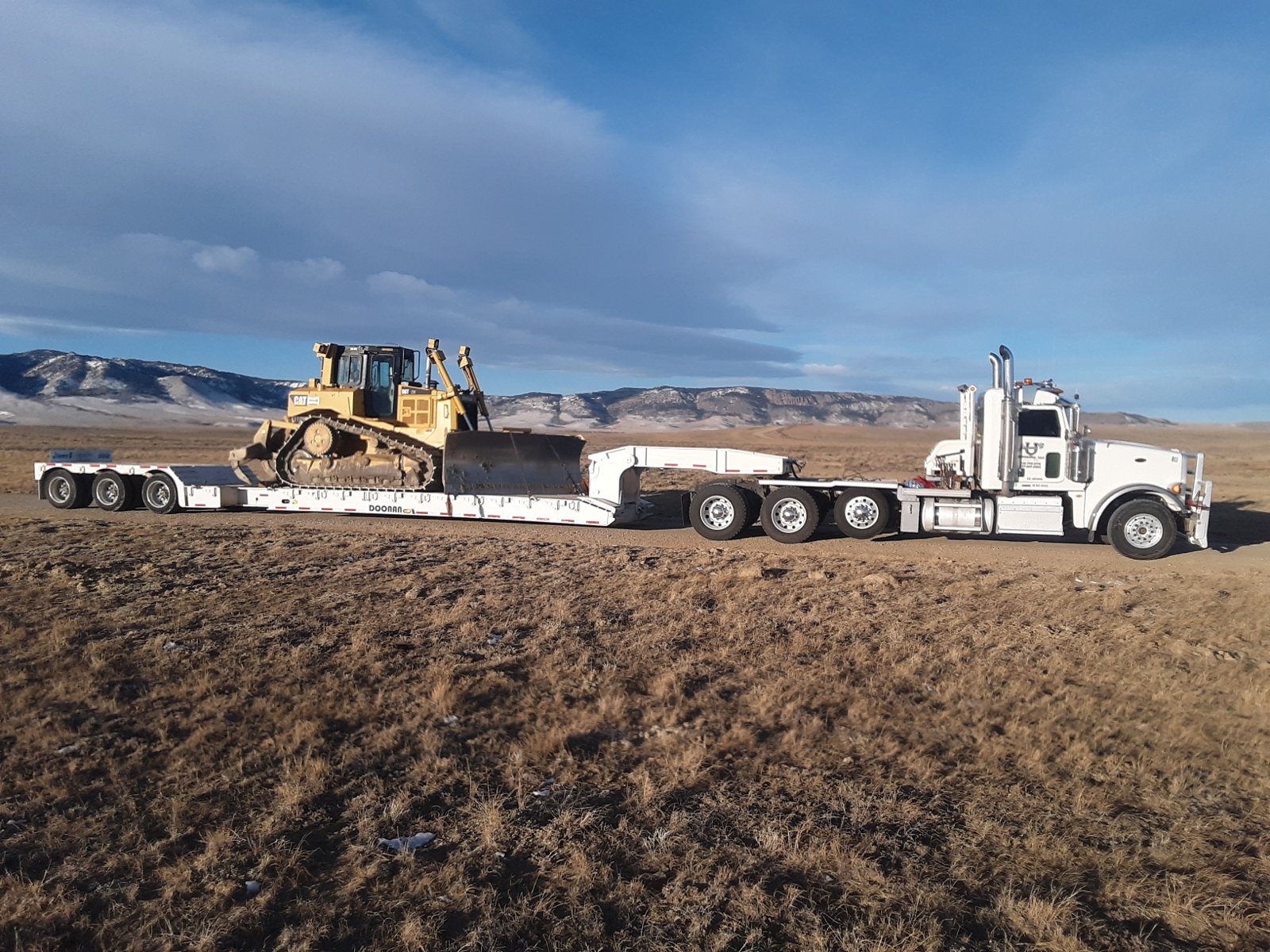
What "not ready" looks like
A machine that won't start. A tank that is still full of water. Gravel that hasn't been arranged. A load that is buried behind other equipment. A gate that is locked and nobody has the key. A drop-off spot that is full of materials. Each of these means the truck arrives and can't do the job.
None of them is unusual. They happen because people are busy, plans change and the haul is one item on a long list. The good news is that almost all of them can be caught ahead of time.
Machines that aren't ready
The most common problem with a machine is that it won't start or won't move. A battery that has gone flat over the winter, a flat tire, a thrown track or a hydraulic leak can all stop a machine from being loaded. So can a machine that is sunk in soft ground or boxed in by other equipment.
Start the machine a few days before the haul. Check that it moves, steers and stops. Move it, if you can, to a spot the trailer can reach. Getting a machine ready to be hauled has a full checklist.
Tanks that aren't ready
With a tank, the usual problem is that it hasn't been emptied, or that it is still connected to pipes, hoses or wiring. A full tank is a very different load from an empty one, and a connected tank can't be moved until it is disconnected.
Empty and disconnect the tank before the day, and clear anything stacked against it. Moving a frac tank or water tank covers what to sort out first.
Gravel jobs that aren't ready
With gravel, the problem is usually at the drop-off. The site hasn't been graded yet. The crew spreading the gravel isn't ready. The spot where the load should go is full of equipment or vehicles. The gravel arrives to find nowhere to go.
Check with whoever is doing the other work that the site will be ready on the day. If there is more than one load, check that each stage will be ready when its load arrives. Planning gravel hauling for a bigger job covers how to time the loads.
Sites that aren't ready
Sometimes the load is ready but the site isn't. The gate is locked. A vehicle is parked across the way in. Materials are stacked on the path. The ground is soft. The person who knows where the load should go isn't there. Each of these can stop the truck. The post on tight access covers the way in, and getting your site ready for a truck covers the rest.
Why a wasted trip matters
When a truck arrives and can't do the job, the trip out and back has still happened. The truck's day has been planned around your job, and the time can't be given to another one at short notice. The haul still has to be done, so it has to be rescheduled.
That is why we ask about the load and both ends in detail on the call, and why we'd rather hear about a problem the day before than find it on the day. How much hauling costs explains how the trip feeds into the price.
If something changes, call
Plans change. A machine breaks down. A crew falls behind. A seller can't be there. If something changes after you book, call us as soon as you know. We'll go over it with you and work out what to do.
A phone call the day before is always better than a truck at the gate with nowhere to go. It gives everyone the chance to sort it out.
A pre-haul check
- The load is ready: the machine runs, the tank is empty and disconnected, the gravel is arranged.
- The way in is clear and the gate will be open.
- The ground is firm along the path and where the truck will stop.
- The drop-off spot is clear and ready.
- Someone at each end knows the truck is coming.
- Anything that has changed after the quote has been passed on.
What can hold up a haul covers the other causes of delay. When you're ready, call (208) 271-3641.